
Sunday, April 24, 2011
Brown v. Board of Education of Topeka, Kansas
This case arose when Brown appealed a collection of cases that were about black children being denied admission to segregated white public school. Even with the Plessy v. Ferguson case which ruled that the 14th Amendment doesn't protect equal facilities from being separate. But Brown brought the appeals up because there were black and white schools being equalized.
 I believe that since there were schools being equalized throughout the nation it gave the perfect example and reason for change in the segregation of schools. By having separate black and white public schools it can cause individuals to feel that one race is superior to the other. Therefore the segregated school are violating the 14th Amendment because not everyone is getting "equal protection of the laws."

Gideon v. Wainwright
 In 1963 Clarence Earl Gideon was found guilty for breaking into a Florida pool and having the intent to steal from it. In jail he appealed to the Supreme Court requesting a second hearing which he received. The court used it to study the Betts v. Brady (1942) case which stated that the 14th amendment didn't require the 6th amendments guarantee of counsel in criminal cases. Black's argument that every criminal who cannot afford a lawyer should receive one by the court in order to have a fair trial is very strong. Because every individual deserves a fair trial even if they cannot afford a lawyer. And from this case the courts now ruled that under the 6th amendment each individual in a criminal case who cannot afford a lawyer is now presented with one.
Saturday, April 23, 2011
Miranda v. Arizona
Ernesto Miranda was found guilty by the Arizona police after a two hour long interrogation when he signed a written confession for the kidnapping an rape of an individual. He appealed the case and argued that he was not advised of his rights to an attorney and that the fifth amendment guaranteed that no person shall be a witness against himself. I believe that the overturning of Miranda's conviction was the right decision because he hadn't know of his right to an attorney. It is the police's job to inform the convicted of his rights because an individual can easily fall into his impairment of judgements from the emotional strain of the interrogation.
 Through this case it can bring up the question of how many innocent people are now sitting in prison for false confessions. With the continual strain and pressure put down by interrogators it is obvious that innocent people who are insecure about themselves can fall to be a victim of signing and agreeing to false accusations. It is very unfortunate that these accidents happen and therefore we must make sure that police officers tell each accused their rights.

Miller v. California
In 1973 Miller had sent out a large number of unrequested advertisments of "adult" film and books. With a 5 to 4 in California's favor Miller was found guilty. I believe that because these mailings from Miller were unrequested, he endangered juveniles to exposures of these adult pictures. And without the conscent of the parents it is breaking the law.
 Even with free speech or free press a person should not be allowed to produce explicit content without any regulations. There must be restrictions to a certain point so that juveniles are not exposed to those kinds of materials at young ages. Without these restrictions you allow a person to almost do anything they please that may harm others in the process and allowing an individual from going unpunished.

Plessy v. Ferguson
In 1896, a one-eighth black male named Plessy was arrested for sitting in the wrong section of a train and refusing to move. After the Supreme Court found Plessy guilty he appealed with the arguments of violating the Thirteenth Amendement which forbids slavery and the Fourteenth Amendment which states "any person within its jurisdiction the equal protection of the laws." My opinion on the case is that by trying to give equal rights to both races there must not be separate sections for blacks and whites. Because by doing so you prevent each individual from their freedom of choice.


Tuesday, April 19, 2011
United States v. Nixon
President Richard M. Nixon was involved in the Watergate scandal, which later revealed secret tapes in which the President had conversations with the White House Oval Office.I believe that Nixon's arguments to not reveal the tapes to the public were inaccurate to the situation. The tapes were not protecting military or national secrets and therefore his arguments were immaculate. I believe just because Nixon was President at the time does not give him the right to proceed with illegal actions. I feel that the courts decisions were the right decision to release the tapes to the public.
 Nixon argued that the tapes were no to be surrendered because the executive privilege protected his office from turning in confidential material. But since these tapes were just recordings about the white house they couldn't be protected.
Monday, April 18, 2011
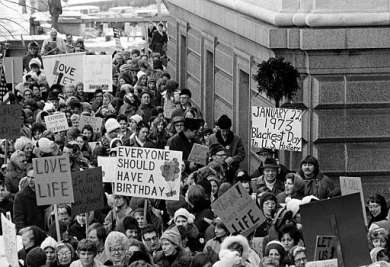
Roe v. Wade (1973)
Subscribe to:
Posts (Atom)